

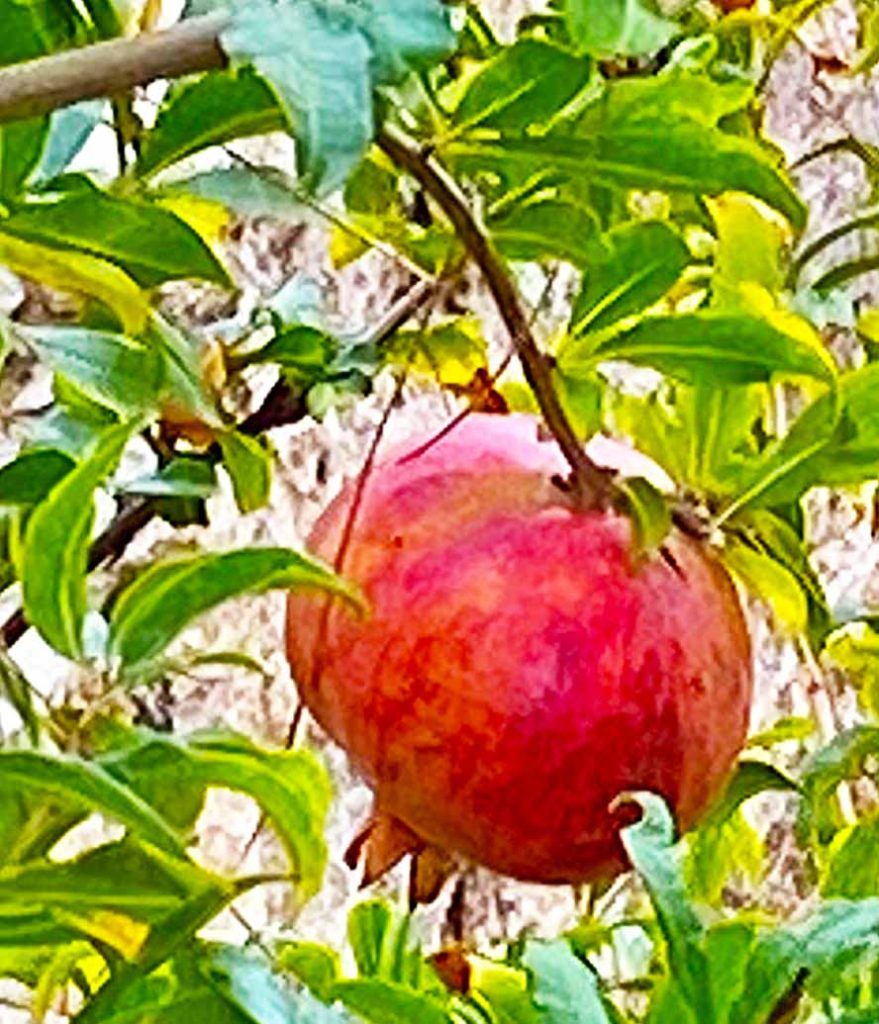
The Pomegranate
In the original draft of “Death and the Poet”, I had dreamed up a highly dubious plotline which involved Ovid travelling in disguise from Tomis, while still in exile there. Yes, I know, it was never going to work! But I did enjoy introducing Ovid’s mother-in-law Sulpicia to the story and one of the saddest things in dropping that whole plotline was that Sulpicia had to go with it. In this scene she and Livia the wife of the Emperor Augustus return to Italy from Athens.
Livia and Sulpicia arrived at the villa in Stabiae quietly. A closed litter met them at the harbour, took them to a small villa which gazed across the Bay.
Livia’s staff were efficient – of course they were! – and Sulpicia was taken straight to a comfortable room, where Hebe soon had things to her own liking. A bath was offered and appreciated after the sea voyage, then Sulpicia was summoned to dinner with Livia.
“I eat lightly after a journey,” said Livia. “I hope you concur.”
“As if I could do anything else!” Sulpicia thought.
Sulpicia had found the voyage from Athens tiring. One had to be very wary around Livia, and Sulpicia felt as though she had not relaxed for months. Sulpicia enjoyed conversation especially about literature and plays, but not when every word had to be tested before it would be said. Ah well, one last bout of travel and she would be in Rome.
“I’m giving you the use of the ship to get you to Ostia,” said Livia. “Ostia itself is sufficiently busy for you to go unnoticed and you’ll be able to find transport to Rome easily.”
“Why must I be unnoticed,” asked Sulpicia.
“You don’t want anyone wondering about your business,” said Livia. “We can’t stop people noticing that you are back without your daughter after – what? – three months’ absence?”
“Not many people are interested in us,” said Sulpicia. “We have lived very quietly since Ovid was exiled, and most of our friends have studiously avoided us.”
Livia concentrated on tearing up a piece of bread into tiny pieces which she used to garnish her soup. A piece of bread per spoon of soup, precisely deposited in the middle of the spoon, then swallowed.
“Since Ovid left, I have kept an eye on you,” she said. “And yes, few people have visited. You have visited of course, Marcia and Fabius Maximus and attended dinners at their house, though your daughter goes less frequently than you. You make sure that you attend the temple of Vesta regularly, and you often go to the library on the Palatine. You walk past my husband’s official residence sometimes. What do you think of Ovid’s punishment?”
“Oh no, you don’t!” thought Sulpicia, suddenly furious. “You are enjoying yourself by needling me, you vicious bitch! Keeping an eye on me, indeed!”
“I don’t think about it,” she said. “It is a fact and I accept it.”
“How sensible,” said Livia. They drank soup together in silence.
When the soup dishes were cleared and a plate of fruit and nuts set out, Livia started again.
“I have not been informed of an interest in your absence,” she said. “If anyone does show an interest, what will you say?”
“That I took Fabia to the Bay of Naples to recover after her the sad deaths of her father and stepmother.” Said Sulpicia. “I have left her there with friends. I have returned to Rome because I am concerned with leaving the house empty for so long. I have a few items of business to attend to and need to see my banker.”
Livia nodded her approval.
“Financial independence is useful,” she commented. “Do you support any causes?”
“I help fund a small school which is run on the hill near the Temple of Minerva,” Sulpicia said. “And I promote a couple of young writers.”
“Of course,” said Livia. “Well that is all enough to justify leaving Fabia and returning.”
“Thank you,” said Sulpicia and took a small pomegranate half. A tiny and very beautiful two-pronged pick had been supplied, and she stabbed at the glistening red beads of fruit, enjoying the feeling until she realised that her napkin was spattered with bright red drops.
“Such a difficult fruit to eat,” said Livia.